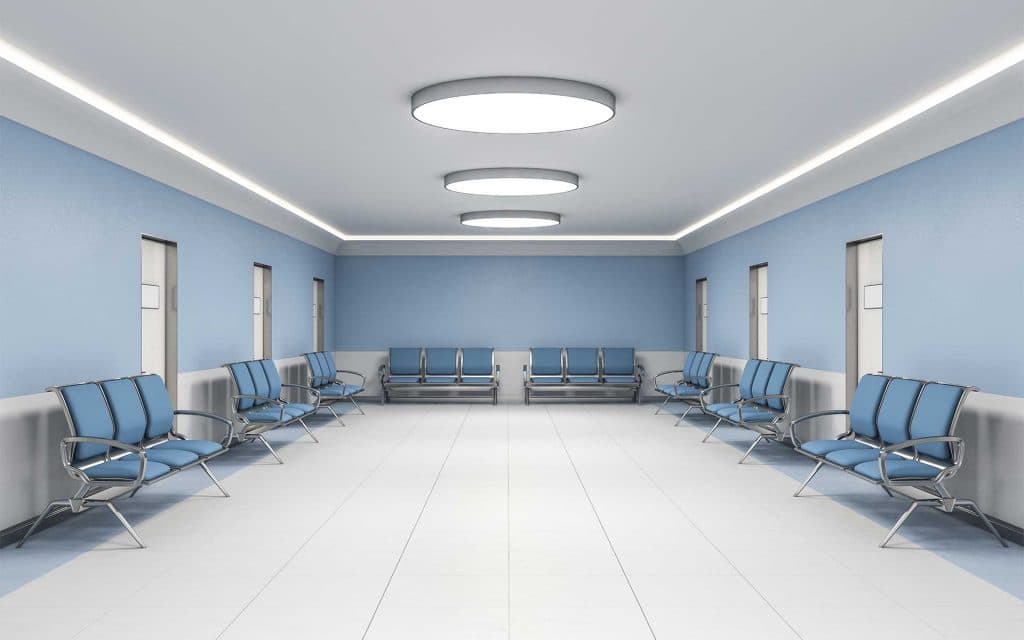
Healthcare Facility Painting Services
Service overview and fit
Healthcare facility painting requires specialized coatings, strict infection control protocols, and coordination with medical operations to protect patient safety and care continuity. Healthcare environments demand antimicrobial coatings, zero-VOC paints for air quality, and contractors who understand HIPAA privacy requirements and hospital safety procedures. Professional healthcare painting creates healing environments while maintaining the sterile, professional appearance patients and families expect.
Healthcare painting encompasses patient rooms, surgical suites, examination rooms, waiting areas, administrative offices, and common areas in hospitals, clinics, surgery centers, and medical office buildings. We use antimicrobial coatings that resist bacterial growth, zero-VOC paints that don't compromise air quality, and work methods that maintain infection control standards. Our team is trained in HIPAA privacy, understands medical facility operations, and coordinates with clinical staff to protect patient care.
Healthcare Facility Painting scopes in Dallas usually depend as much on planning as they do on coating selection. Square footage matters, but access, occupancy, equipment protection, and the sequence of other trades are what determine whether the work moves smoothly. For many properties, the first useful conversation is not “what color” but “when can crews safely prep, stage, and close out without interrupting the building’s normal rhythm.”
What the work typically includes
That is especially true for specialty work where owners are balancing appearance, durability, and schedule pressure at the same time. When a scope is written around real building conditions instead of assumptions, the job is easier to price accurately, easier to communicate to stakeholders, and easier to finish without the usual last-minute change orders or access surprises.
How projects are staged
Healthcare-Specific Planning
Coordination with infection control, facilities, and clinical teams. Development of work plan that protects patient care and maintains safety protocols.
Infection Control Setup
Establishment of containment barriers, HEPA filtration if required, and protection protocols. Staff briefing on facility-specific requirements.
Coating Application
Application of antimicrobial, zero-VOC coatings using low-dust methods. Multiple thin coats for even coverage without odor or particulate.
Clinical Inspection & Clearance
Final walkthrough with facilities and infection control teams. Air quality verification before releasing spaces back to clinical use.
On active commercial properties, that staging usually includes more than just work order sequencing. It often means coordinating entry routes, isolating occupied areas, confirming cure or dry times with the owner, and deciding how crews will handle daily cleanup so the property never feels partially abandoned between shifts.
Planning factors for Dallas properties
Dallas's healthcare sector includes major systems like UT Southwestern Medical Center, Parkland Health, Baylor Scott & White, and hundreds of medical office buildings and clinics. These facilities require contractors who understand healthcare environments and deliver painting services that enhance patient experience while protecting safety and care quality. That local context shapes how estimates are built, how crews are staged, and how coating systems are matched to the property rather than copied from a generic spec.
Owners comparing bids for healthcare facility painting usually need to evaluate more than the coating line item. Surface condition, access requirements, occupant impact, prep scope, protection standards, and the complexity of closeout all influence the real workload. Treating those items explicitly usually produces a better schedule, fewer surprises in the field, and a finish standard that aligns with how the property is actually used day to day.
EPA-registered antimicrobial paints that inhibit growth of bacteria, mold, and mildew. Proven effectiveness in healthcare settings for infection prevention.
Zero-VOC and ultra-low VOC paints that maintain indoor air quality. Safe for use in occupied patient care areas including intensive care units.
Evidence-based color selection promoting healing and reducing patient stress. Coordination with interior designers and healthcare planners.
Execution, access, and closeout expectations
Once a healthcare facility painting scope moves from estimate to production, the quality of the finish depends heavily on how access and protection are handled. Crews usually need a clear answer on staging areas, lift paths, occupied-room turnover, protection of inventory or electronics, and how daily cleanup will be verified before the next shift or tenant cycle begins. Those decisions influence labor hours just as much as the square footage itself, which is why experienced commercial painters spend so much time clarifying logistics before paint ever gets opened.
Closeout matters for the same reason. Owners typically want punch work documented, touch-up material labeled, and any maintenance recommendations handed over in a way that is actually useful to facilities teams. For Dallas properties dealing with heat, dust, tenant turnover, or frequent operational changes, that final handoff often determines whether the project feels complete or simply finished. A stronger scope usually anticipates those expectations instead of treating them as afterthoughts.
Long-term performance is usually part of the same conversation. Recoat timing, wash cycles, traffic patterns, and the simple question of who will be responsible for future maintenance all affect which system makes sense today. That is why many commercial owners compare proposed scopes not only by price, but by how clearly the contractor explains upkeep, documentation, and what conditions could shorten the life of the finish once the building goes back into full use.
Common use cases and owner priorities
Healthcare Facility Painting is usually the right fit when the property needs a combination of finish consistency, operational coordination, and predictable closeout. That includes scenarios like hospitals renovating patient care areas, medical office buildings refreshing appearance, surgery centers maintaining sterile environments. In practical terms, owners are often looking for a contractor who can work through prep and application in a way that respects staff, tenants, inventory, or production schedules while still leaving a durable finished surface behind.
Frequently asked questions
Can you paint patient rooms while the hospital is operating?
Yes, we regularly paint in operating healthcare facilities. We work with your facilities team to schedule work around patient care, use zero-VOC paints that don't impact air quality, and maintain infection control protocols. Patient rooms can often be painted between discharges with same-day occupancy.
What are antimicrobial coatings and why use them in healthcare?
Antimicrobial coatings contain EPA-registered additives that inhibit bacterial and fungal growth on painted surfaces. In healthcare environments, these coatings provide an additional layer of infection prevention, particularly important in patient care areas, restrooms, and high-touch surfaces.
Do your painters understand HIPAA and medical facility requirements?
Yes, our team receives training in HIPAA privacy requirements, infection control protocols, and healthcare facility operations. We understand the importance of patient privacy, safety procedures, and coordination with clinical staff.