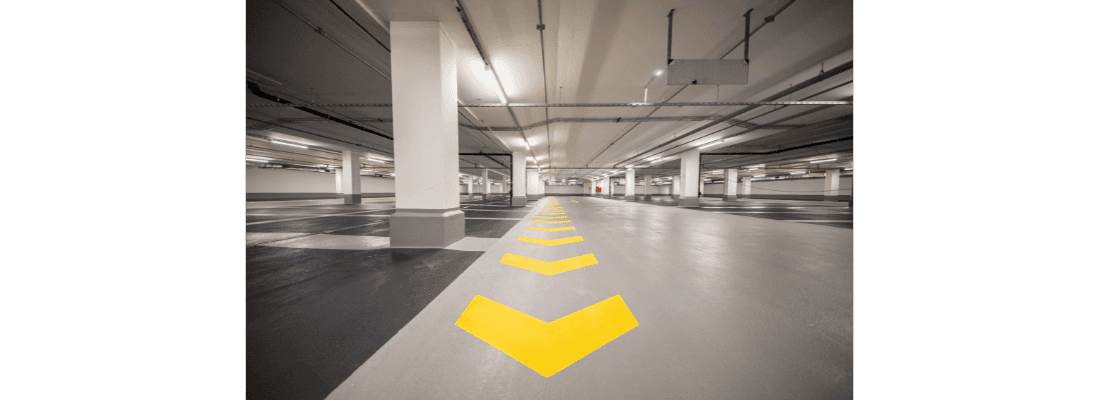
Parking Garage Painting & Protective Coatings
Service overview and fit
Parking garage painting and coating protects concrete structures from traffic damage, water intrusion, and chemical exposure while improving appearance and wayfinding. Parking structures face harsh conditions including vehicle traffic, tire chemicals, gasoline and oil, de-icing salts, and water penetration. Professional parking garage coatings extend structure life, prevent costly concrete repairs, and create safe, well-lit environments for parkers.
Parking garage painting encompasses traffic-bearing deck coatings, wall and ceiling painting, column wrapping and protection, line striping and wayfinding, and waterproofing systems. We use specialized coatings engineered for parking structure conditions including traffic wear, chemical resistance, and slip resistance. Projects are phased to maintain parking capacity during work, with night and weekend scheduling available to minimize disruption.
Parking Garage Painting scopes in Dallas usually depend as much on planning as they do on coating selection. Square footage matters, but access, occupancy, equipment protection, and the sequence of other trades are what determine whether the work moves smoothly. For many properties, the first useful conversation is not “what color” but “when can crews safely prep, stage, and close out without interrupting the building’s normal rhythm.”
What the work typically includes
That is especially true for specialty work where owners are balancing appearance, durability, and schedule pressure at the same time. When a scope is written around real building conditions instead of assumptions, the job is easier to price accurately, easier to communicate to stakeholders, and easier to finish without the usual last-minute change orders or access surprises.
How projects are staged
Structure Assessment
Inspection of concrete condition, drainage, existing coatings, and structural issues. Development of phasing plan to maintain parking operations.
Concrete Preparation
Crack repair, concrete restoration, surface grinding or shot blasting to create proper profile. Critical for coating adhesion and performance.
Coating Application
Installation of traffic-bearing deck coatings, wall and ceiling painting, and waterproofing systems. Multiple coats achieving specified thickness.
Line Striping & Completion
Layout and installation of parking stall striping, directional arrows, handicap markings, and wayfinding. Final inspection and opening to traffic.
On active commercial properties, that staging usually includes more than just work order sequencing. It often means coordinating entry routes, isolating occupied areas, confirming cure or dry times with the owner, and deciding how crews will handle daily cleanup so the property never feels partially abandoned between shifts.
Planning factors for Dallas properties
Dallas's commercial districts feature extensive parking structures from downtown office towers to suburban medical centers and shopping malls. These structures represent major capital investments requiring professional maintenance to prevent deterioration. Our team has coated parking structures throughout the Dallas metroplex, from small office building garages to massive multi-level public facilities. That local context shapes how estimates are built, how crews are staged, and how coating systems are matched to the property rather than copied from a generic spec.
Owners comparing bids for parking garage painting usually need to evaluate more than the coating line item. Surface condition, access requirements, occupant impact, prep scope, protection standards, and the complexity of closeout all influence the real workload. Treating those items explicitly usually produces a better schedule, fewer surprises in the field, and a finish standard that aligns with how the property is actually used day to day.
Single-component polyurethane with aggregate for slip resistance. 20-40 mils DFT.
Two-component epoxy with quartz broadcast. 60-125 mils DFT.
Fast-cure MMA coating allowing return to traffic in 1-2 hours. 60-125 mils DFT.
Execution, access, and closeout expectations
Once a parking garage painting scope moves from estimate to production, the quality of the finish depends heavily on how access and protection are handled. Crews usually need a clear answer on staging areas, lift paths, occupied-room turnover, protection of inventory or electronics, and how daily cleanup will be verified before the next shift or tenant cycle begins. Those decisions influence labor hours just as much as the square footage itself, which is why experienced commercial painters spend so much time clarifying logistics before paint ever gets opened.
Closeout matters for the same reason. Owners typically want punch work documented, touch-up material labeled, and any maintenance recommendations handed over in a way that is actually useful to facilities teams. For Dallas properties dealing with heat, dust, tenant turnover, or frequent operational changes, that final handoff often determines whether the project feels complete or simply finished. A stronger scope usually anticipates those expectations instead of treating them as afterthoughts.
Long-term performance is usually part of the same conversation. Recoat timing, wash cycles, traffic patterns, and the simple question of who will be responsible for future maintenance all affect which system makes sense today. That is why many commercial owners compare proposed scopes not only by price, but by how clearly the contractor explains upkeep, documentation, and what conditions could shorten the life of the finish once the building goes back into full use.
Common use cases and owner priorities
Parking Garage Painting is usually the right fit when the property needs a combination of finish consistency, operational coordination, and predictable closeout. That includes scenarios like office buildings with parking structures, shopping center parking garages, hospital and medical center parking. In practical terms, owners are often looking for a contractor who can work through prep and application in a way that respects staff, tenants, inventory, or production schedules while still leaving a durable finished surface behind.
Frequently asked questions
How long does parking garage coating take?
Timeline depends on structure size and phasing requirements. A typical 300-space, 3-level garage takes 4-6 weeks when phased to maintain partial parking availability. We can accelerate by working nights and weekends or adding crews. Fast-cure MMA systems allow return to traffic in hours rather than days.
Can you coat our garage without closing it completely?
Yes, we specialize in phased approaches that maintain partial parking capacity during work. We can phase by level, by section, or work nights and weekends to allow daytime parking. Complete closure is faster and more cost-effective but usually isn't necessary.
How do parking garage coatings prevent concrete damage?
Traffic coatings create waterproof barriers preventing water, de-icing salts, and chemicals from penetrating concrete. This prevents the freeze-thaw damage and chemical attack that cause concrete spalling and rebar corrosion. Regular coating maintenance is far less expensive than structural concrete repairs.